
Manufacturing Capabilities
Details shaped by the way they are made.
Form, finish, function and presentation are considered as one system—so the final card feels deliberate from its edge to its unboxing.
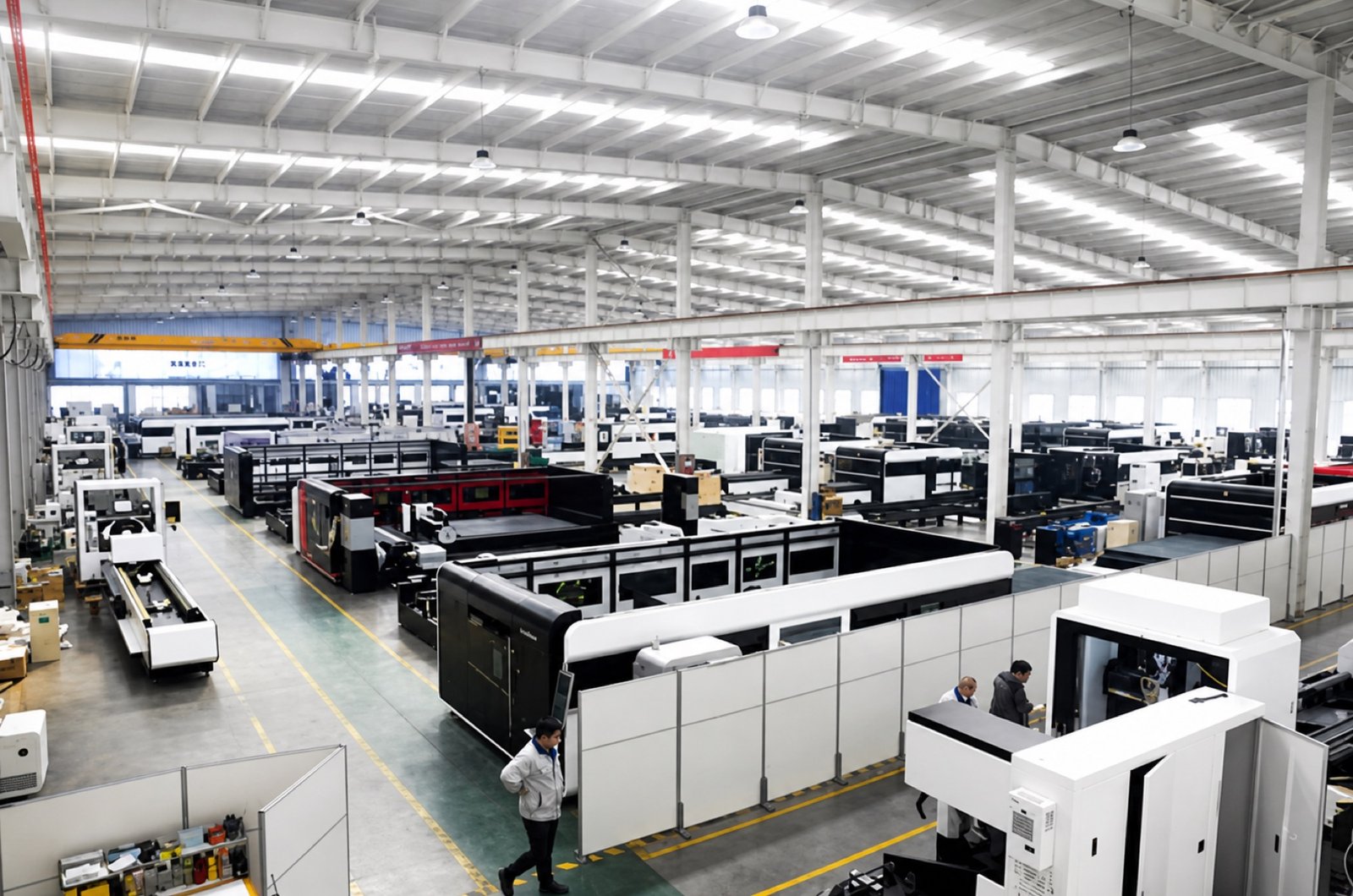
Capability Index
Eight ways to control the final impression.
Capabilities are strongest when selected together. A cut-out changes the structure; a finish changes the light; printing adds controlled color; packaging completes the hand-off.
Precision Etching
Recessed detail, patterns and controlled graphic depth.
Laser Engraving
Crisp marks, personalization and fine information.
Cut-outs & Shapes
Negative space, edge profiles and distinctive silhouettes.
PVD & Plating
Metallic color and a considered surface character.
Color Printing
Brand color, imagery and information on metal.
NFC Integration
A physical card with a digital action built into it.
Accessories
Sleeves and holders that protect and add tactility.
Packaging
A presentation system designed around the card.
Shape the form.
These operations define physical detail: what is recessed, marked, opened or shaped. They determine much of the card’s visual rhythm before color is added.
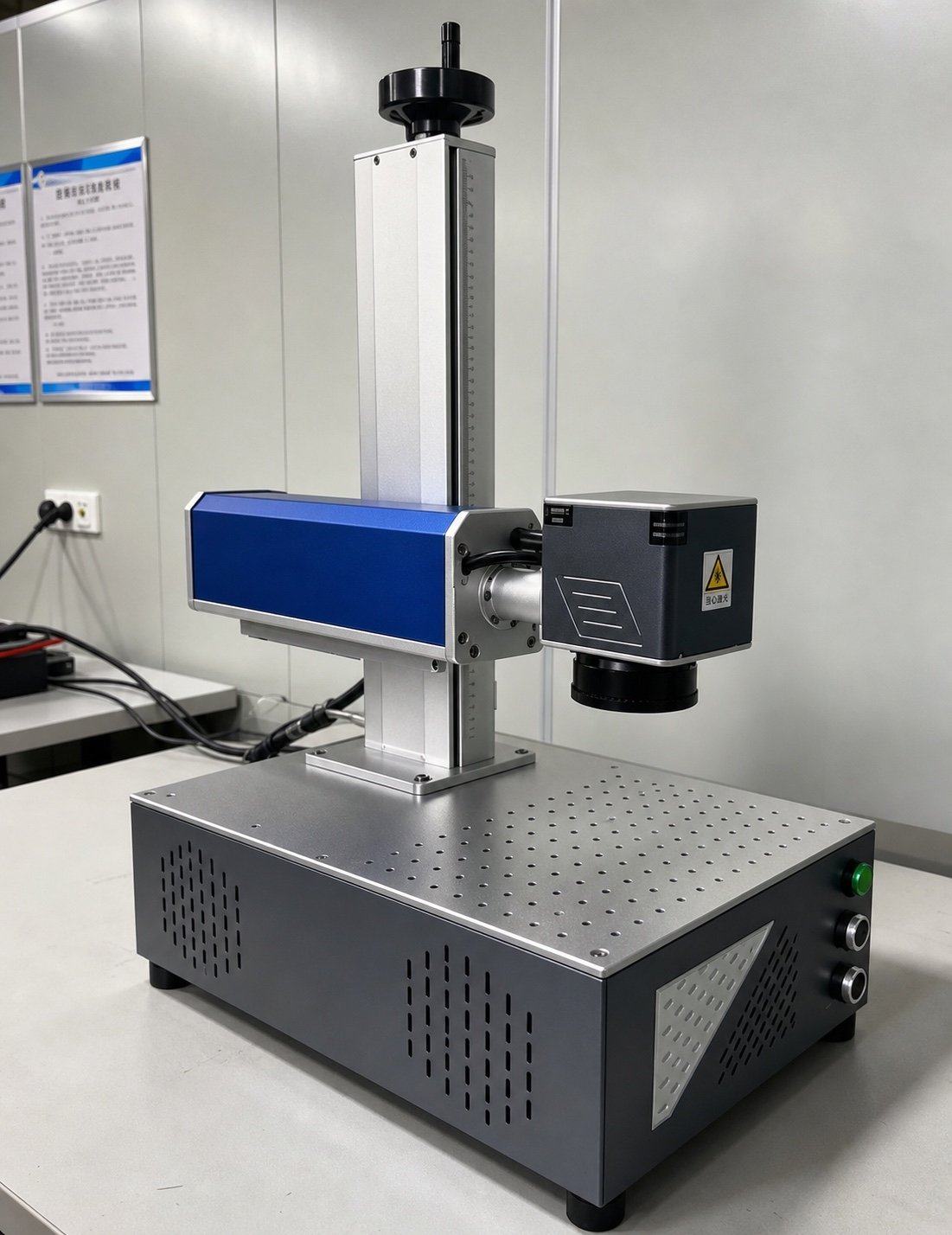
Precision Etching
Use etched areas to create recessed graphics, repeating texture or depth that catches light differently from the surrounding surface.
Laser Engraving
Use laser marking for crisp information, controlled line work or variable details that need a precise, direct appearance.
Cut-outs & Custom Shapes
Use openings and considered silhouettes to make the structure itself part of the identity.
Control the surface.
Surface choices decide how the card carries color and light. Metallic finish and printed detail can be composed for restraint, contrast or a more expressive brand treatment.
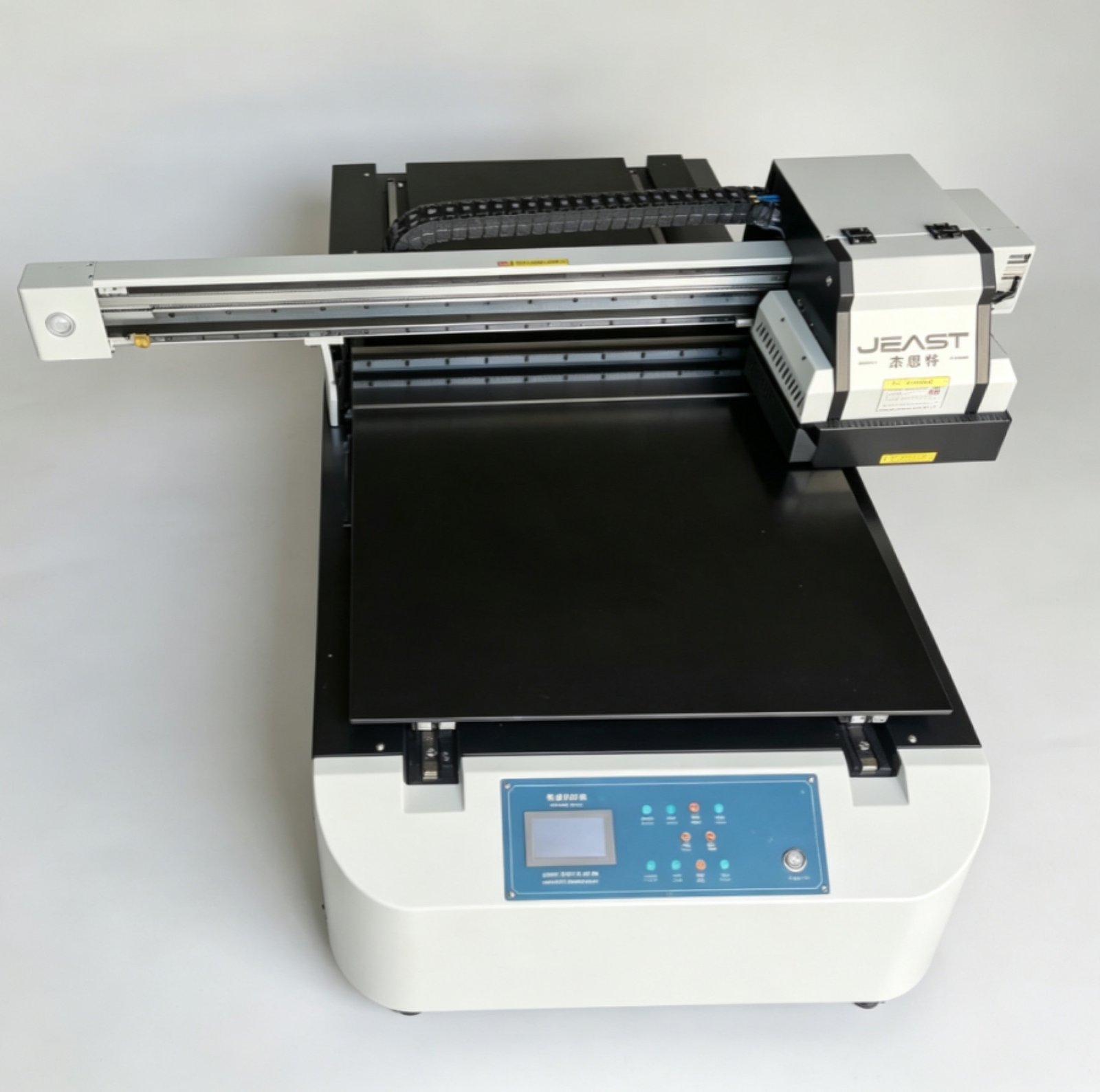
Black PVD & Plating
Use a metallic surface treatment to establish the base color and character of the card before graphic details are layered onto it.
Color Printing
Use printing for brand color, artwork and information that cannot be expressed through metal contrast alone.
Finish Pairing
Combine restrained surface changes so key details stand forward while the base material remains part of the design.
Add a digital action.
NFC can connect a physical card to a chosen digital destination. The functional requirement is considered alongside material, artwork and intended use during feasibility review.
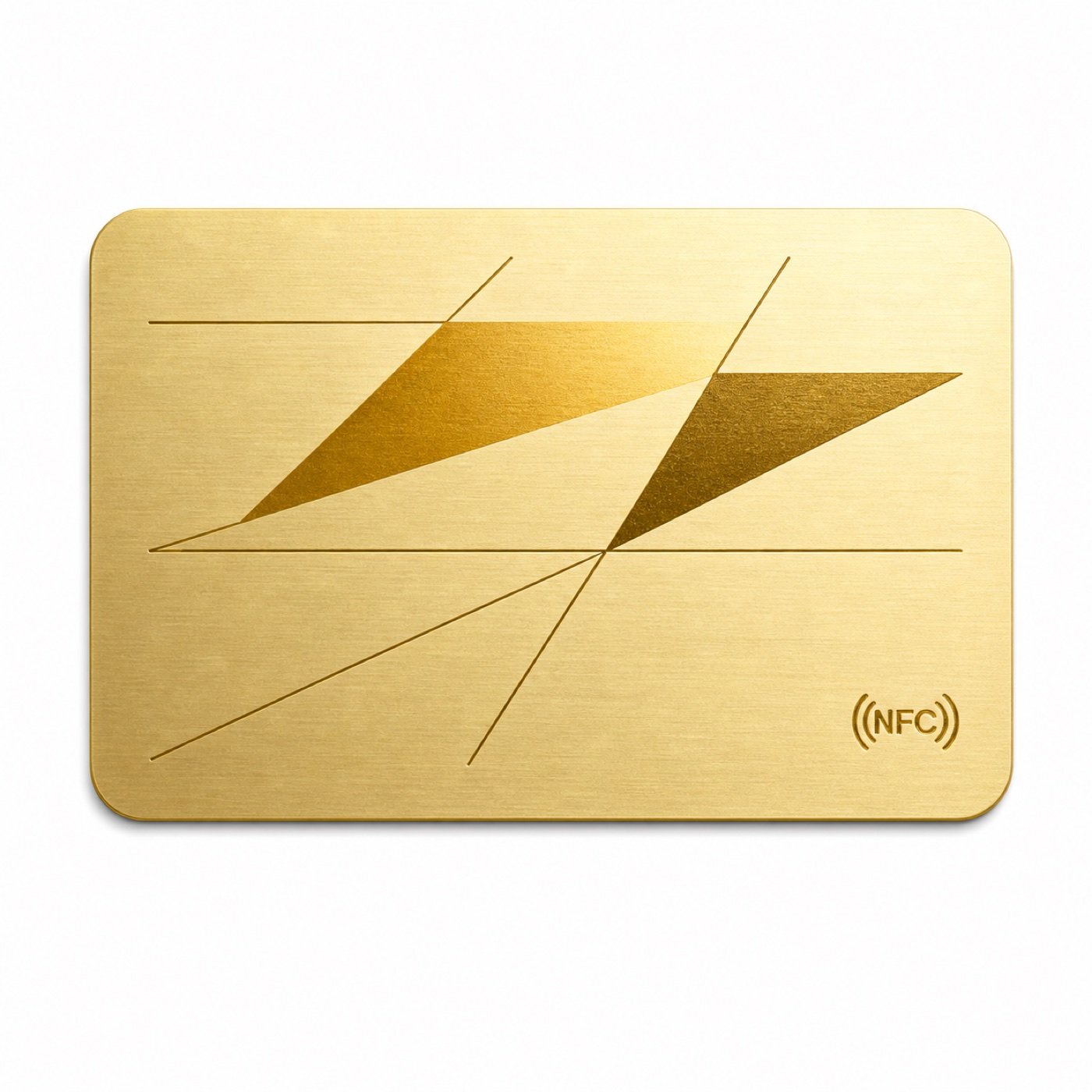
NFC Integration
Build a tap interaction into the card for a digital destination defined by the project.
Design Coordination
Plan the visible artwork and functional area together so the interaction belongs to the design rather than feeling added later.
Finish the hand-off.
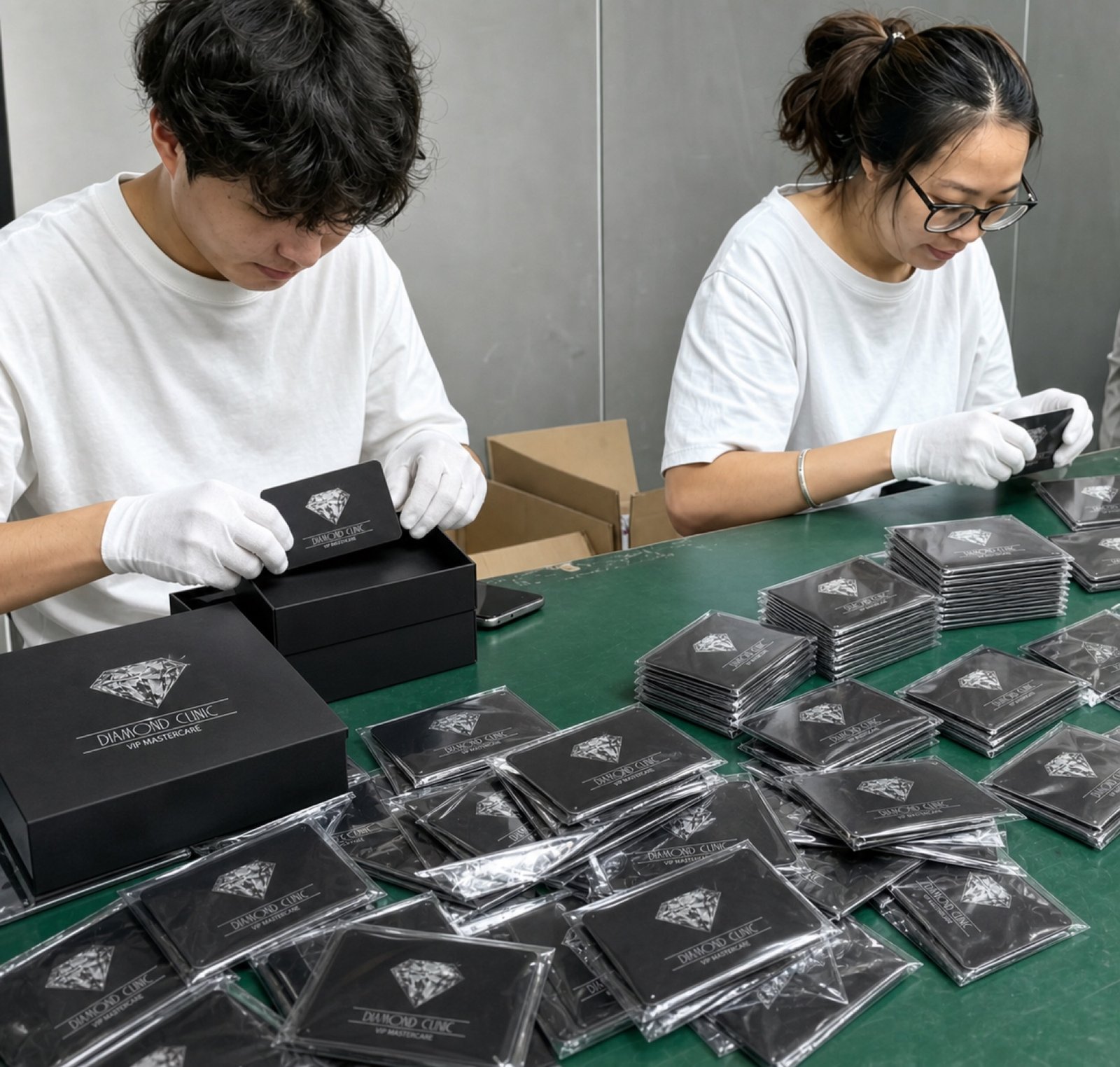
The recipient meets the packaging before the card. Accessories and presentation should protect the surface, support the use case and extend the same material language.
Accessories
Choose a sleeve, holder or wallet when the card needs protection, daily carry or an added tactile layer.
Custom Packaging
Coordinate a presentation box or pack around the card’s proportion, finish and intended moment of delivery.
Compose the Specification
Choose the effect before the operation.
You do not need to name every process. Tell us what the card should communicate and how it should be used; we can map that intent to a sample direction.
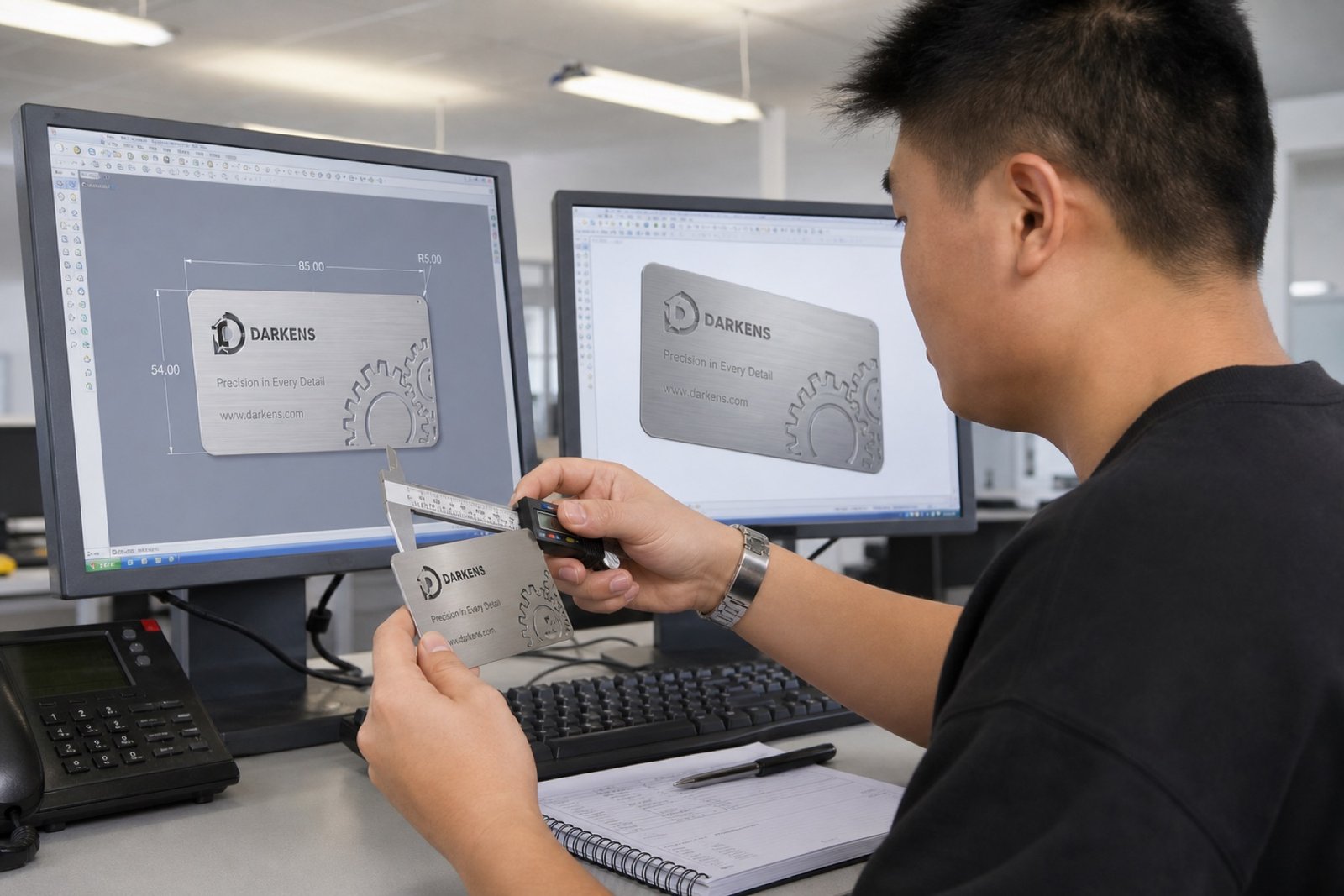
Start with impression
Quiet, technical, ceremonial, bold or understated.
Define the function
Introduction, membership, access, gifting or digital connection.
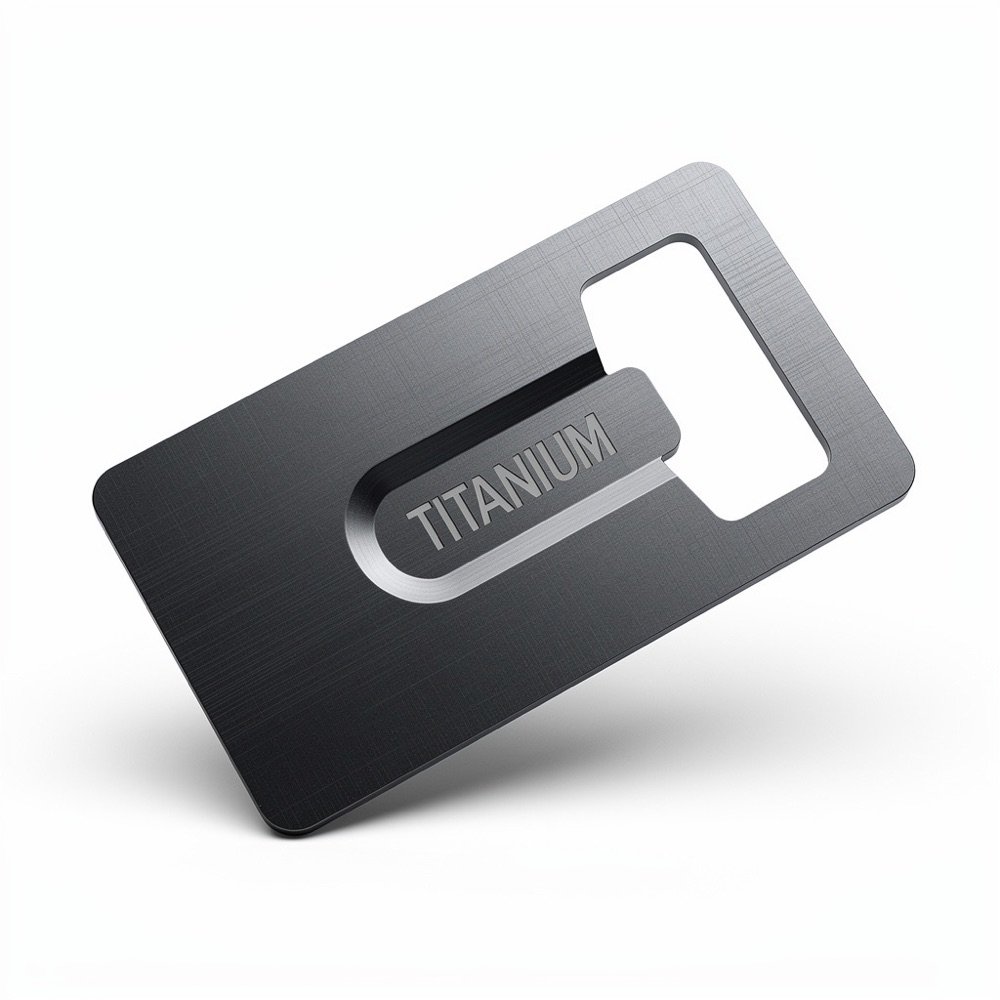
Prioritize the detail
Surface, edge, cut-out, color, personalization or packaging.

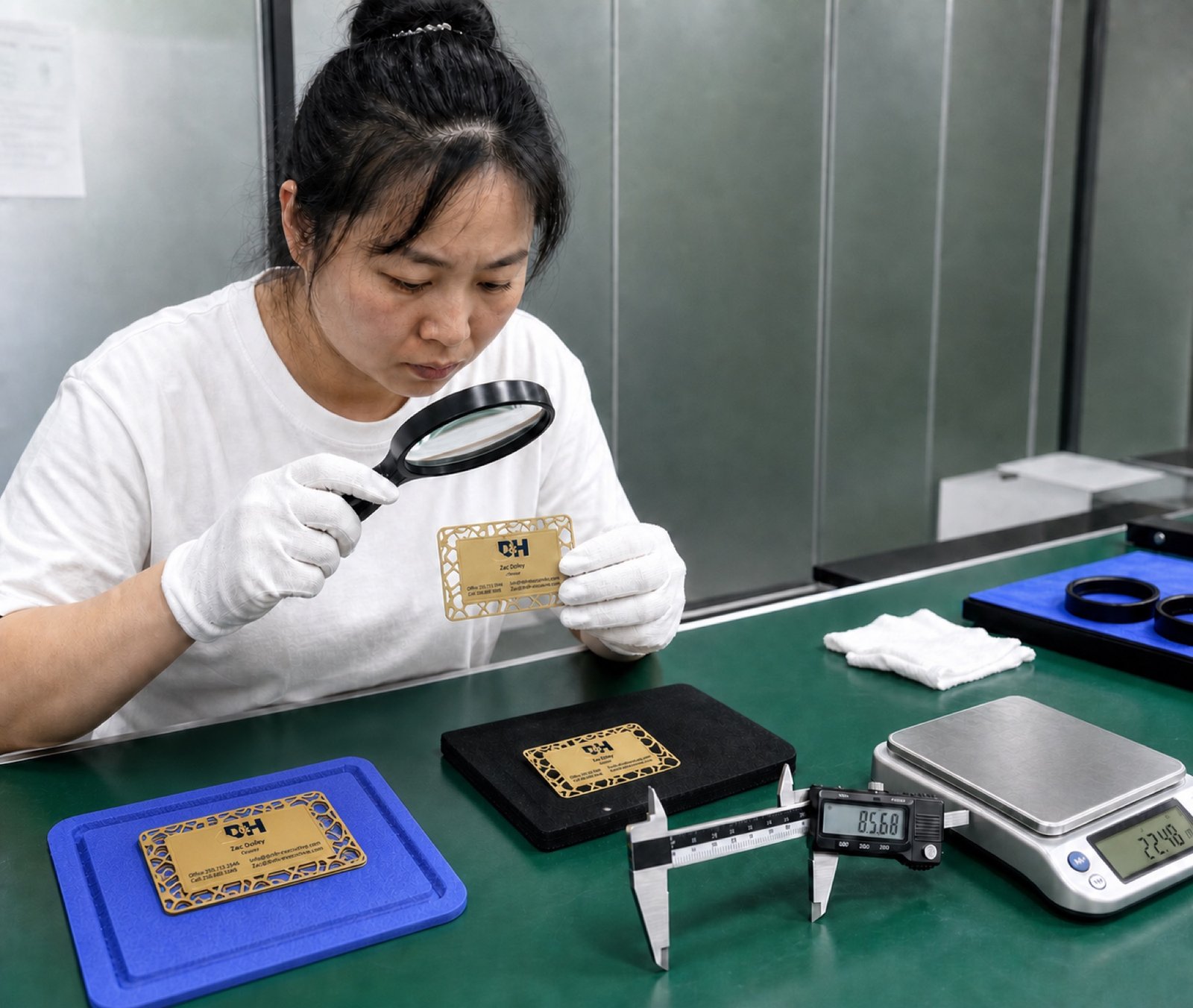
Approve a sample
Use a physical reference to align the final production direction.
Build the right combination
Describe the result. We will map the route.
Share a reference, artwork or simply the impression you want the finished card to create.
Discuss your specification